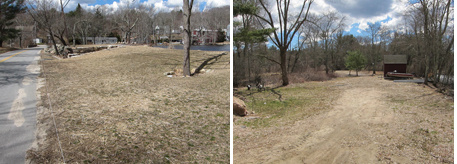
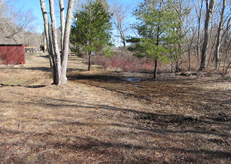
Flood Overview
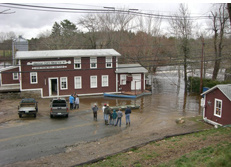
Rhode Island experienced a state of emergency on March 30 & 31, 2010 when waters rose to levels that hadn’t been seen in over 100 years. Hundreds of people had to evacuate their homes and businesses. In 1886, there was a tremendous flood of similar proportion that affected the village of Usquepaugh and destroyed the original mill that sat on the other side of the spillway/waterfall. As a result, our predecessors rebuilt the mill on the upriver side and continued to utilize the river’s power. Thanks to their intelligence and wisdom, Kenyon’s Grist Mill was virtually undamaged. Water never reached the production floor, but the basement filled with 6-7 feet.
Unfortunately, the earthen dam and spillways, also owned by Kenyon’s Grist Mill suffered severe damage from the excessive rain. This caused the dam to scour and eventually breach. Our dam was built in 1696 to create a reservoir of water to power various mills on the site. It has created a very well established watershed that must be protected and preserved. This part of Rhode Island’s environment stretches through South Kingstown, Exeter, and North Kingstown. The Nature Conservancy’s Queen's River Preserve and the Audubon Society of Rhode Island’s Eppley Preserve and Fisherville Brook Wildlife Sanctuaries rely on this reservoir, which creates a habitat for a variety of wildlife. Though Kenyon’s Grist Mill no longer uses the water to power the mill, the aesthetic nature of such a site is an asset to the business as well as the entire village. Since the site is privately owned, all of the work that has been done in Usquepaugh on the dam and spillways has been done at Kenyon’s Grist Mill’s expense without federal funding. The final, estimated costs for the completed/permanent restoration project range from $600,000 to $1,000,000.
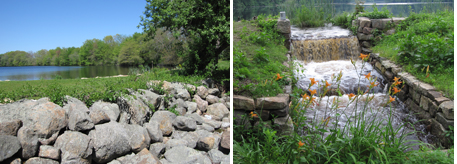
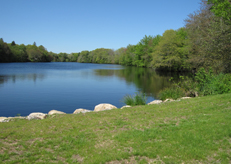
Before the Flood: 2009
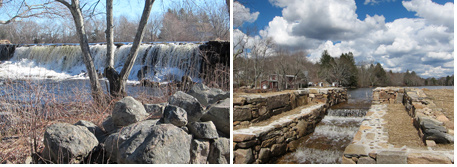
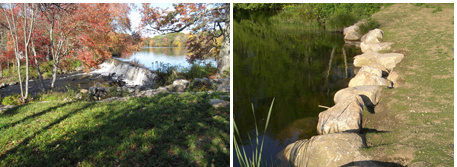
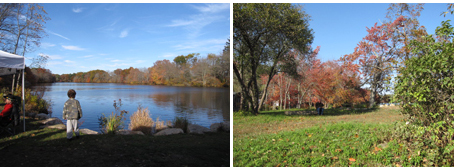
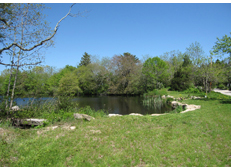
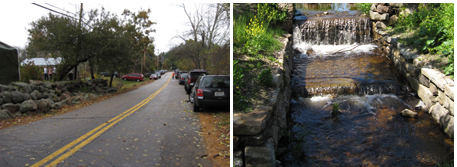
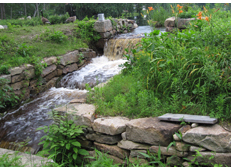
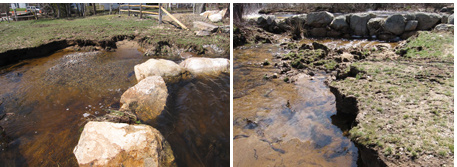
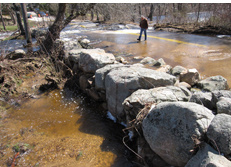
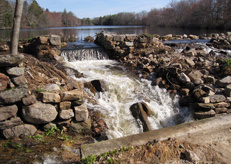
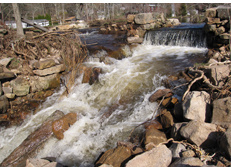
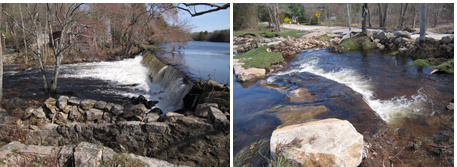
This photo documentary was created to honor the beauty and serenity of the Queen's River and the earthen dam before the disaster struck. It also gives a firsthand look at the power and strength of water and the destruction it left behind.
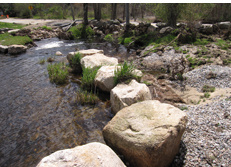
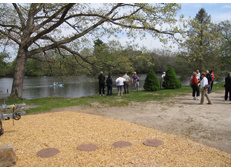
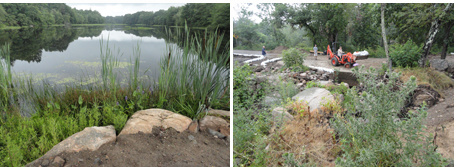
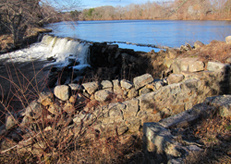
Two years prior to the flood, Kenyon's Grist Mill invested nearly $50,000 in maintenance and improvements on the earthen dam. The work that was done precluded its total failure during the flood. As shown below, the stones that were installed at the river's edge still stand today.

Flood Day 1: Tuesday, March 30, 2010
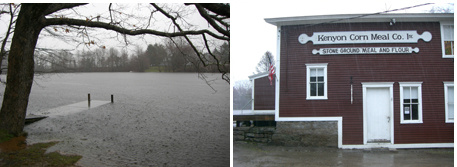
In the month of March, southern Rhode Island received 19.37 inches of rain. On Monday, March 29th at midnight, the water was even with the top of the earthen dam. The box culvert, installed by the state in the 50's would not take any more water. This caused the water to back up and saturate the dam.
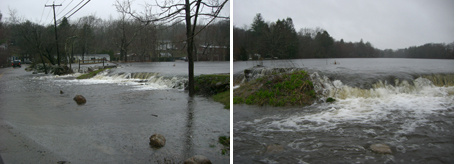
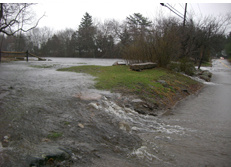
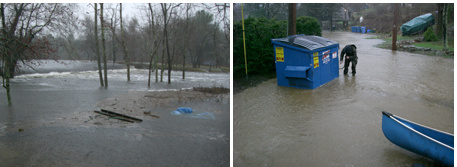
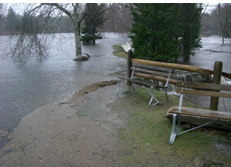
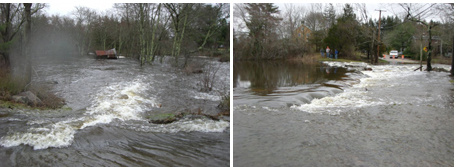
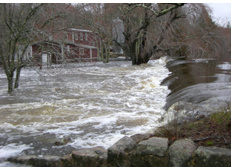
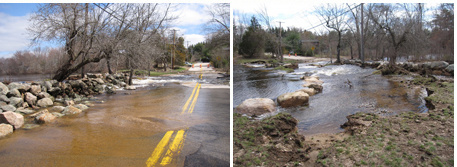
When we arrived in Usquepaugh on March 30th at 6 a.m., we witnessed the earthen dam topping and beginning to scour. Old Usquepaugh Road was covered, but still passable. At 4 p.m., the water had taken over the road as well.
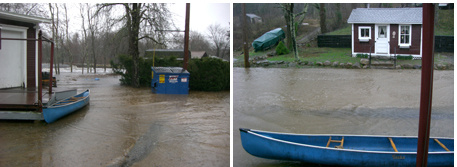
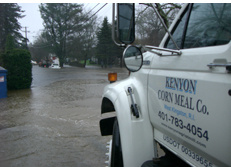
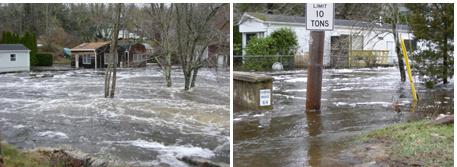
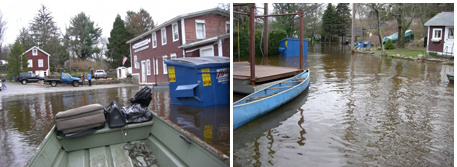
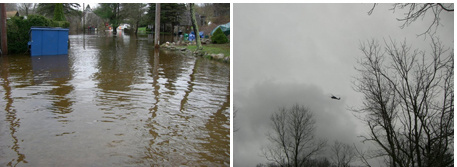
By the mill, Glen Rock Road became part of the river, making it necessary to chain the dumpster. It was hard to believe that there could be any more water coming.
Flood, Day 2: Wednesday, March 31, 2010
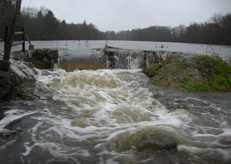
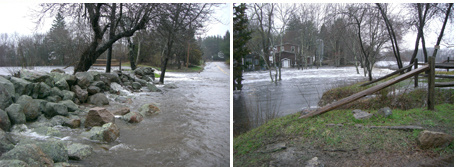
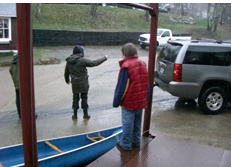
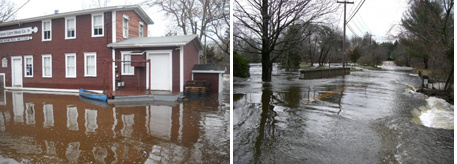
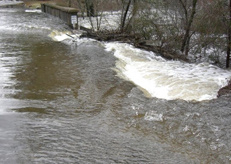
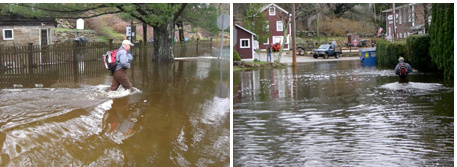
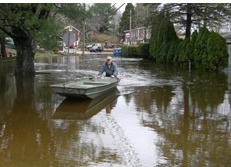
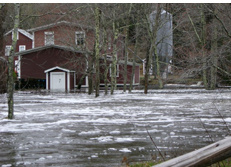
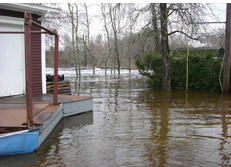
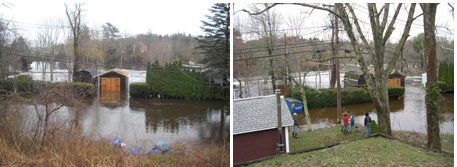
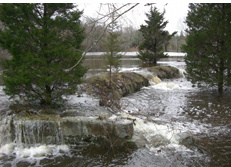
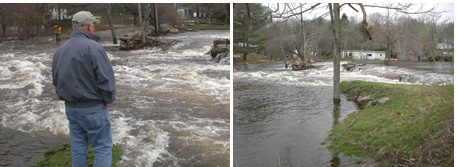
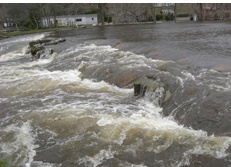
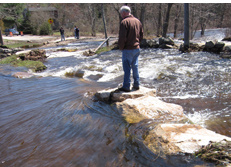
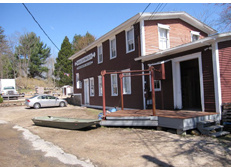
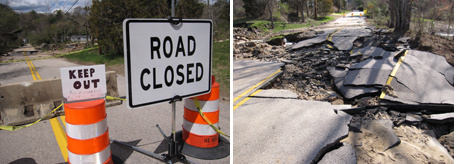
When we arrived on the morning of March 31st, we were amazed at the power of water. This was absolutely unimaginable! Roads were closed and we needed a boat to get to the building. Fortunately, the water never reached floor level. The basement was another story.
The arch bridges on Old Usquepaugh Road and Route 138 caused their own problems, creating a bottle neck, which flooded the village completely.
After the Flood: April 1, 2010
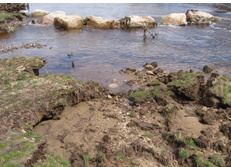
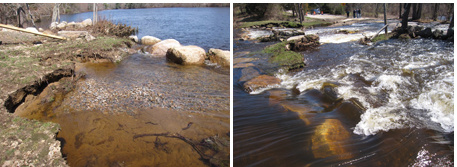
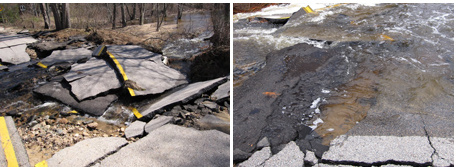
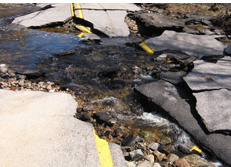
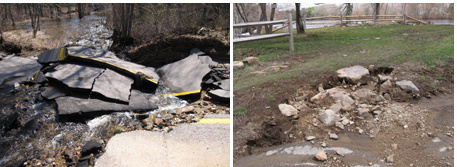
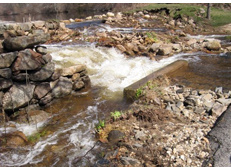
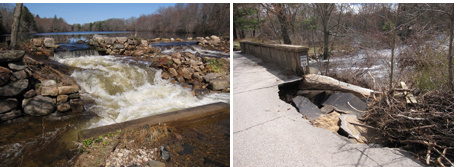
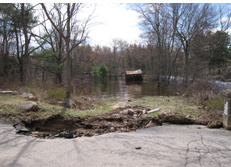
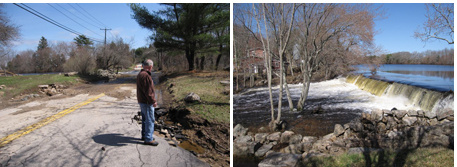
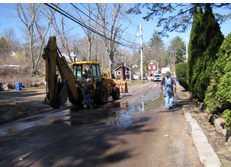
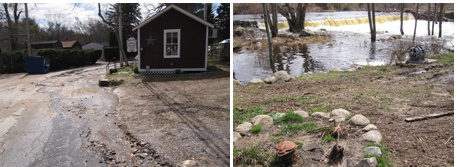
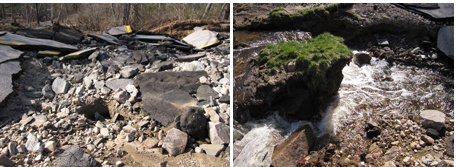
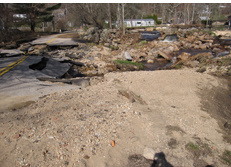
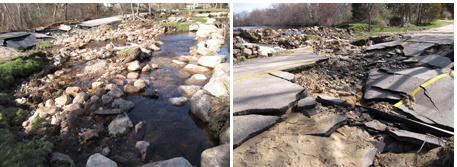
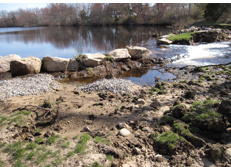
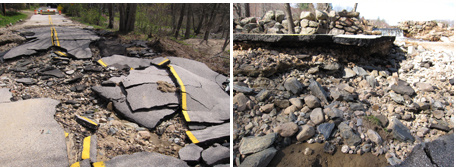
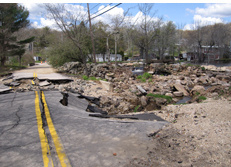
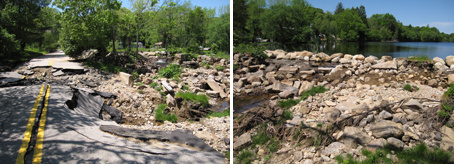
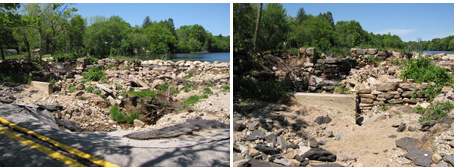
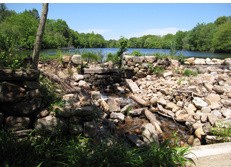
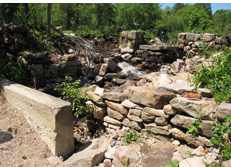
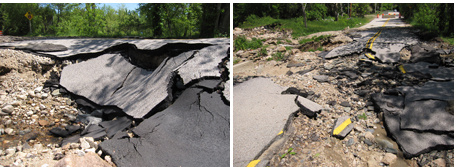
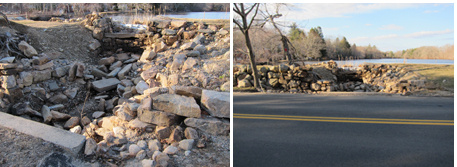
As the water began to recede, we were able to get a peek at the magnitude of the damage. There were sheets of asphalt, debris, and tons of soil that had swept down river.

Drying Out: Mid April 2010
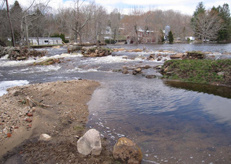
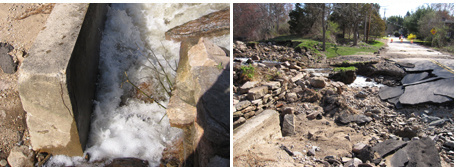
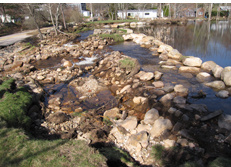
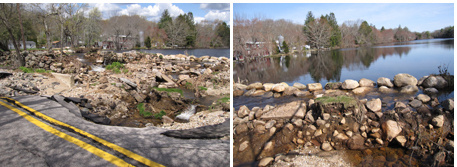
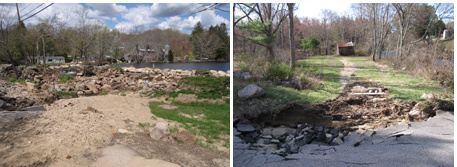
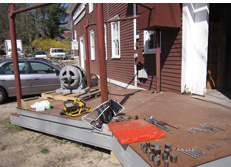
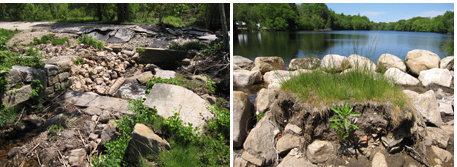
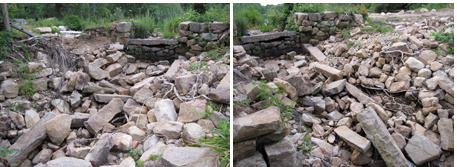
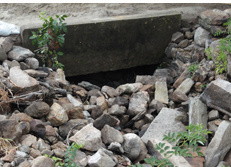
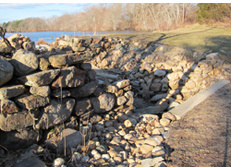
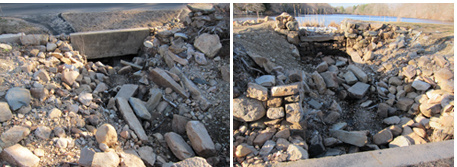
We were able to truly investigate the damages after the water receded completely. There were piles of rocks and massive erosion. A large amount of soil disappeared altogether. As seen below, the box culvert could only handle this amount of water. It took nearly two weeks for the basement and the mechanicals to dry out in order to resume production.
Spring Tours Begin: End of April 2010
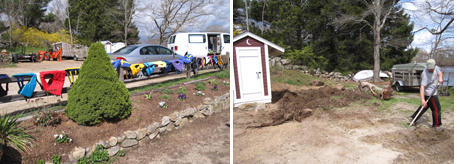
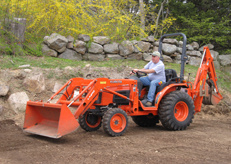
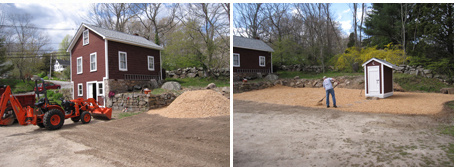
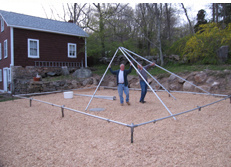
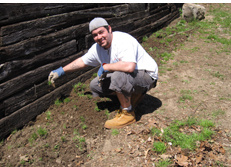
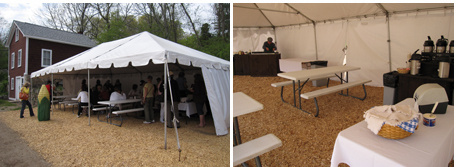
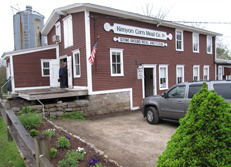
During the spring & summer, Kenyon's Grist Mill is visited by a large number of coach buses for tours. Although wholesale and manufacturing is the major part of our business, we enjoy teaching the public about Rhode Island’s history and culinary heritage. With the help of volunteers, spring clean up around the mill begins.
At this time, the dam repair project is put on hold, as the engineers decide what to do with Old Usquepaugh Road, a state road. We were unable to start any repair work until their decisions were made.
New Growth in Destruction: May/June 2010
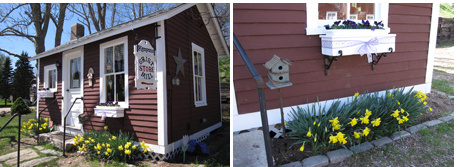
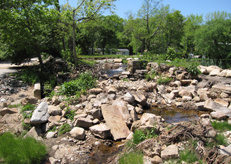
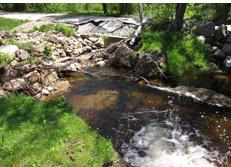
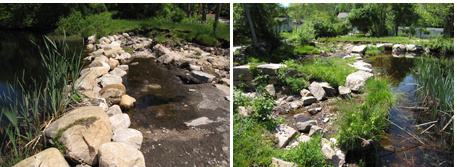
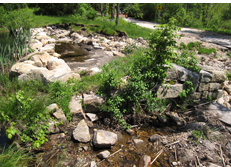
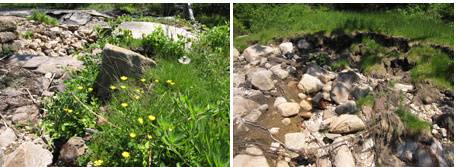
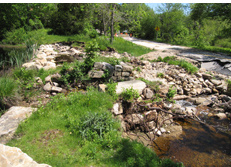
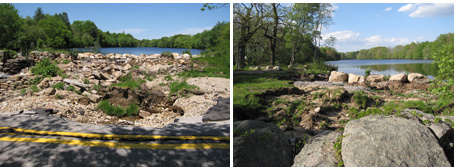
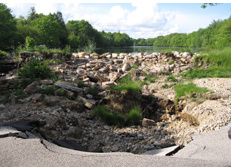
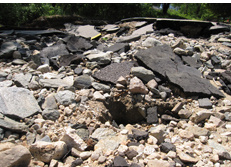
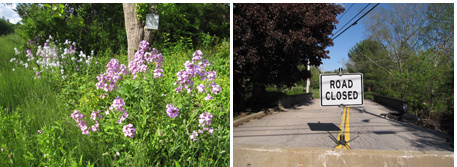
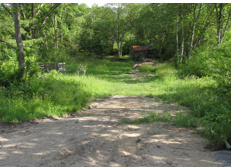
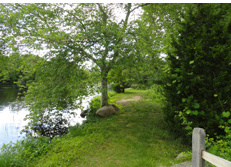
Nature continues to grow as we continue to wait. We were encouraged with nature’s attempt to make itself look more beautiful amidst the destruction. Since Old Usquepaugh Road continued to be unusable, neighbors had to adapt to a new route to their homes.
Old Usquepaugh Road and the earthen dam are both vital areas for our festivals. It was mandatory to cancel the Spring Festival that was planned on May 22 & 23. All we could do was wait.


First Dig: June 2010
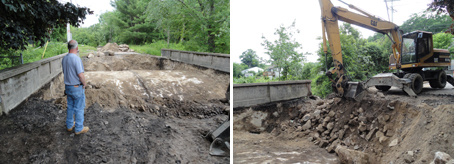
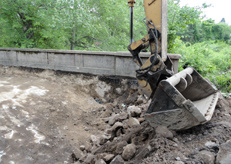
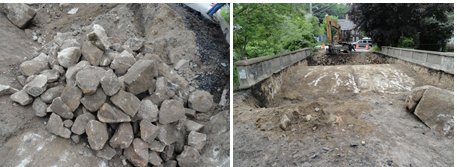
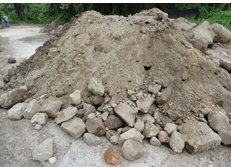
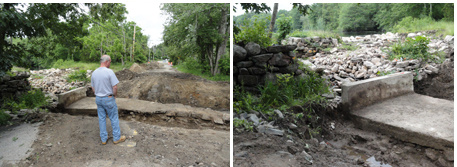
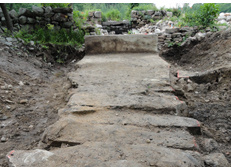
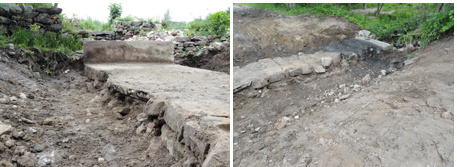
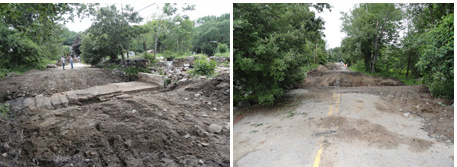
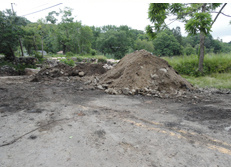
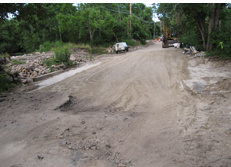
We were excited when the first equipment arrived in mid June to repair the road. We were told that the entire road project would be completed by July 9. Many repairs to the road were necessary to access the damaged areas on the earthen dam. The arched bridge and the box culvert were the two areas that needed the most attention.
Beginning of Construction: Late June 2010
At this point, men were working on site every day battling the heat. Progress seemed to be at a snail’s pace. We were hoping that they would rectify the problem and make the box culvert wider and larger to accommodate excess flood waters. Unfortunately, the plan was to entomb the undersized box culvert and maintain its size.
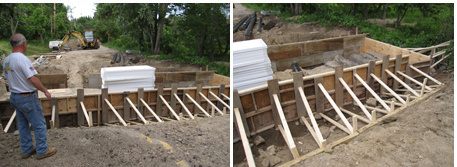
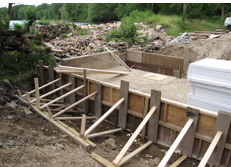
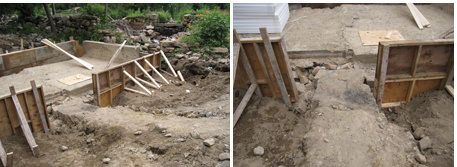
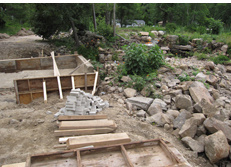
Progress: Late June/Early July 2010
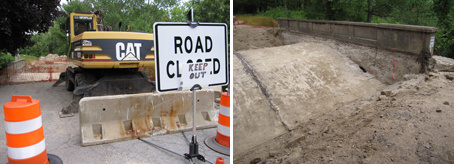
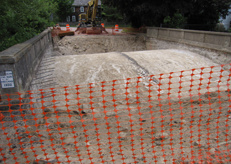
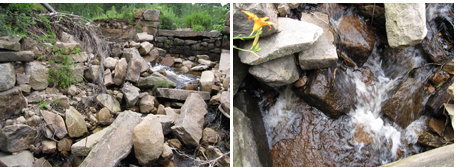
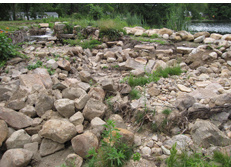
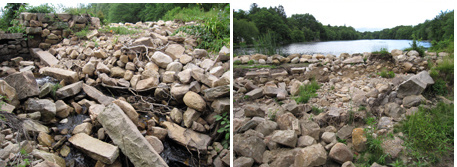
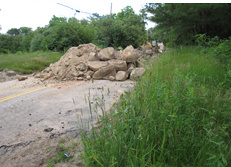
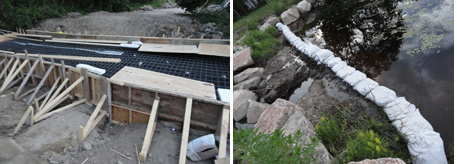
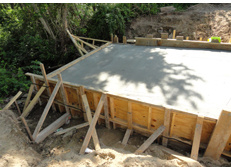
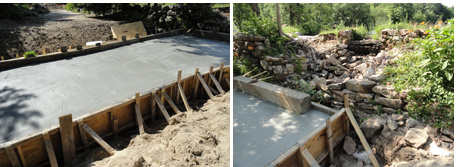
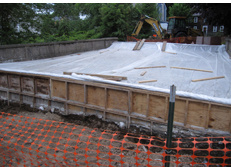
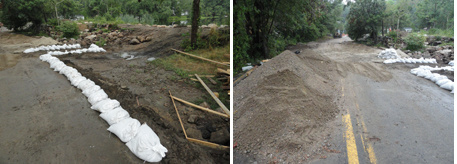
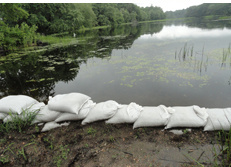
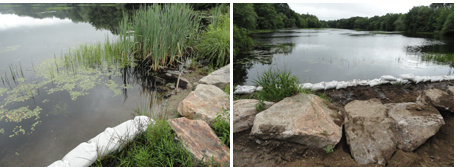
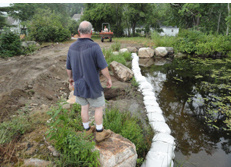
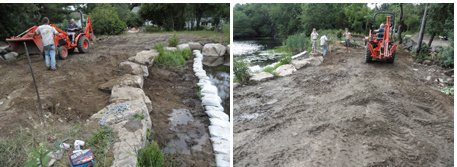
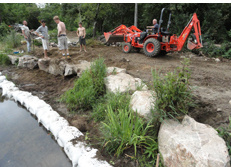
The progress of the construction moves forward steadily, but it is obvious that the road would not be completed by July 9. We were finally able to begin projects on the earthen dam. Rocchio Construction crew by day and Kenyon’s Grist Mill volunteers by night. We first created a protective row of sand bags along the edge of the Queen’s River to keep things dry while we worked.
Rocks & Dirt: Early July 2010
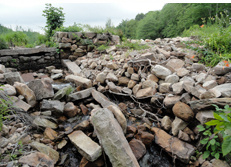
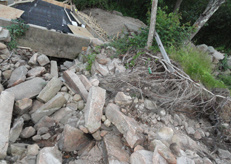
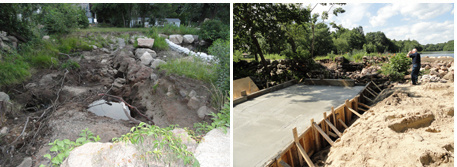
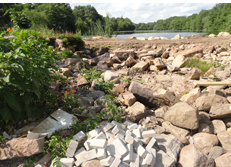
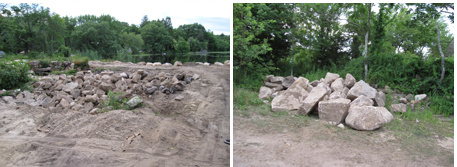
At this time, final repairs on the box culvert and the Usquepaugh Bridge were completed. Although the road was still closed and awaiting more fill and asphalt, we were finally able to access all of the areas on the earthen dam. We continued working every night moving rocks and replacing lost fill. The flood unearthed a treasure of cut stones that had to be removed from the earthen dam.
Our Summer Festival was fast approaching and we were concerned the whole project would not be completed in time. After speaking with contractors who believed it was unlikely for us to complete our goal, even I began to wonder if it was possible.
Sand Bags, Fill, and More Sand Bags: Mid July 2010
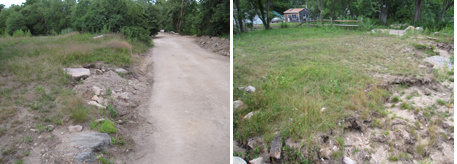
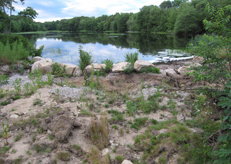
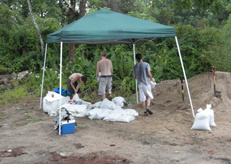
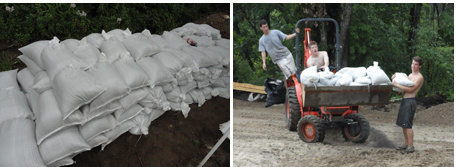
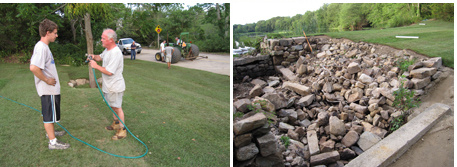
I am very fortunate to have very dedicated neighbors, employees, family and friends. Thanks to my son, Kevin and his friends, Chris and Drew's youthful energy, over 300 sandbags were filled to elevate the level of the river. The sand was donated by Dick Kenyon/C.D. Kenyon Excavating.
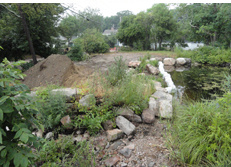
John Bradley, owner of JGB III Landscape and his crew spent many late nights moving soil, excavating stones, and replacing over 500 yards of fill under tractor lights.

New Grass: Late July 2010
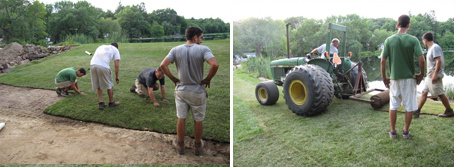
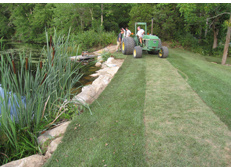
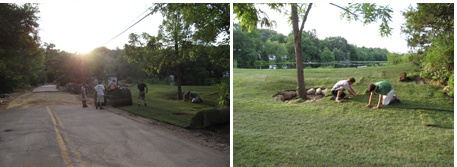
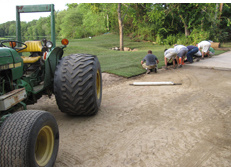
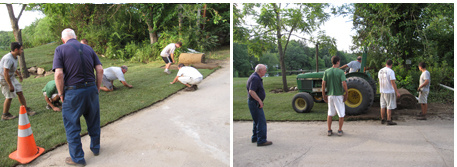
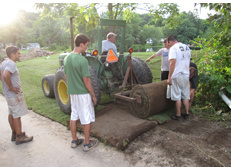
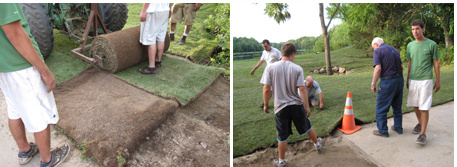
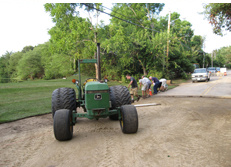
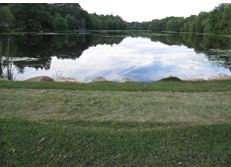
John Bradley, an expert in sod installation, began unrolling 40 rolls of local turf donated by Peter Gavitt of Turf Inc. With the help of John, Kevin, Drew, Chris, Zack, Mike, Josh, and Dad we finished installation just two days before the Summer Festival. John Rocchio Corporation worked overtime to make sure the road would be open for the event. Seventeen hours to spare. Job well done!
Summer Festival: July 24 & 25, 2010
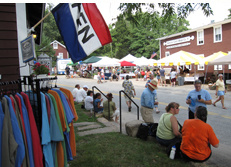
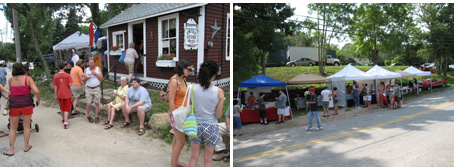
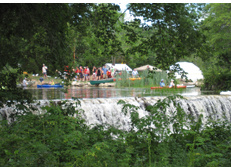
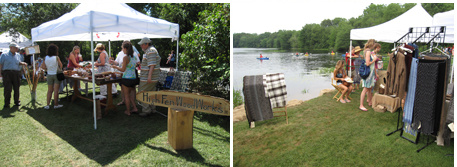
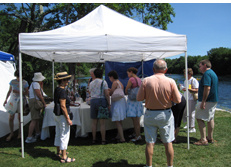
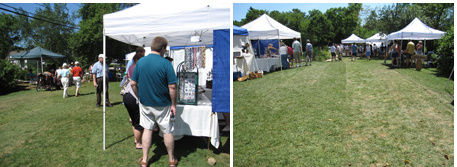
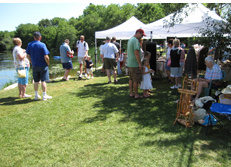
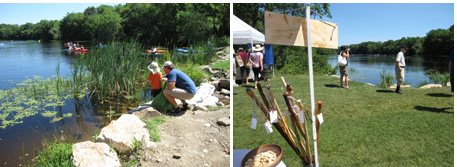
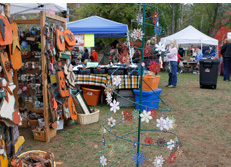
In 2009, Kenyon's Grist Mill began hosting a series of events - one for spring, summer, and fall. These small "open-house" style events grew larger in only one year. The Harvest Festival in October was naturally the largest of them all. In 2010, with high ambitions, Kenyon's Grist Mill sought to have three events, a Spring Festival, Summer Festival and Harvest Festival. Though plans were made to make them all unique and different, the Spring Festival had to be unexpectedly cancelled due to the devastating flood.
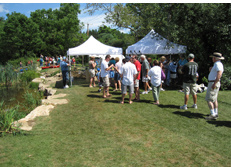
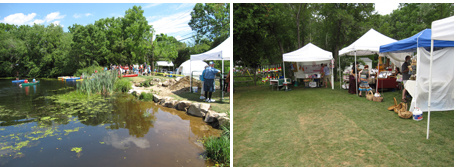
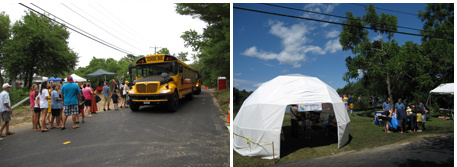
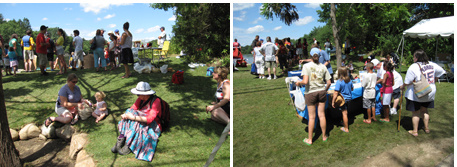
After the 2010 Summer Festival, Kenyon's decided to focus solely on the Harvest Festival. This Summer Festival, however, had gone down in history as being one of the most monumental accomplishments we had pulled off in such a short period of time. A crowd of nearly 5,000 people visited our little village. Many visitors, and even vendors, had no idea how devastated the area had been just two months, and even days before! Although it was a very hot weekend and ending with torrential rain, this festival was a tremendous success.
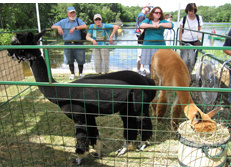
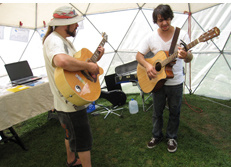
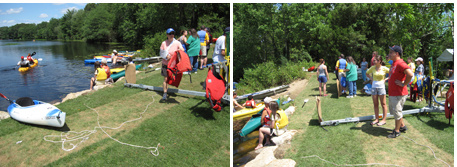
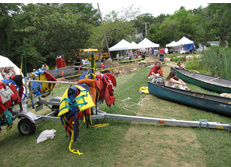
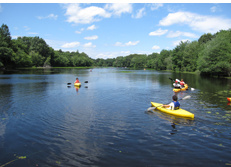
The event promoted and benefited over 50 local vendors including farms, restaurants, artisans, musicians, and authors. We offered free kayaking on the Queen's River with donations for the Wood Pawcatuck Watershed Association. We also raised 1,242 pounds of food and 800 pounds of clothing for the Jonnycake Center.
Weary of the intensity of our work, we continued on with the rest of our community fair season across New England.
Harvest Festival: October 23 & 24, 2010
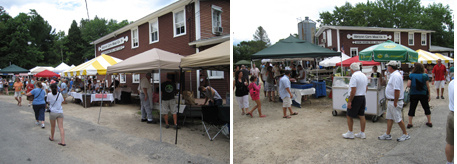
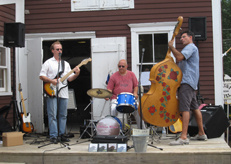
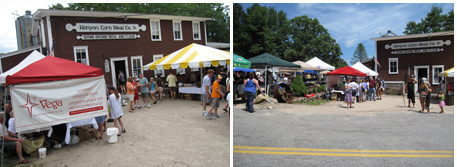
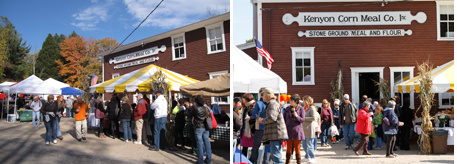
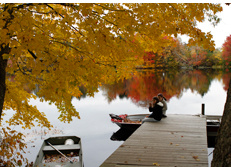
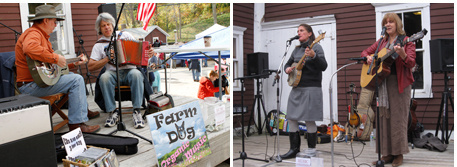
Wrapping up a very long, hard season with a great, well attended Harvest Festival was a fitting reward. Over 50 vendors and over 6,000 visitors made the Harvest Festival a wonderful event. This time, we raised 1,917 pounds of food and 500 pounds of clothing for the Jonnycake Center.
After a moment of respite, we became concerned about what winter would do to this already damaged site.
One Year Later: March 29, 2011 - Permanent Repairs are Not Completed
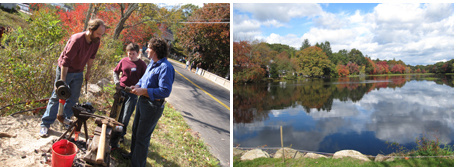
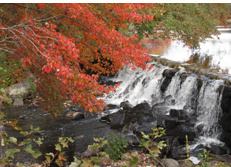
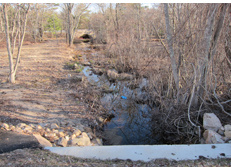
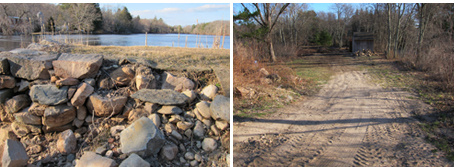
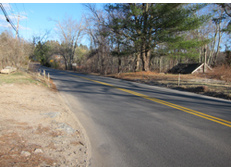
We were relieved that our temporary repairs held up well over the winter, but there was still much work that needed to be done. Federal and state agencies offered no assistance for any part of our dam’s repair and restoration after the flood. The Natural Resources Conservation Service (NRCS) tried to match us with numerous programs, but they were exclusively geared towards non-profits and municipalities.
One program aimed towards farms was a possible revenue source. Local turf farmers who pulled irrigation from the river were eligible for grants to help maintain the irrigation pool. To contribute, Pete Gavitt from Turf Inc. pursued one such grant. Unfortunately, this grant had a 25% match – a lot of money for us to come up with. Meanwhile, we sought contributions of work, materials, expertise and funding, and asked the community to contact us if anyone was looking for a very gratifying project.
Summer 2012 - The Work Continues
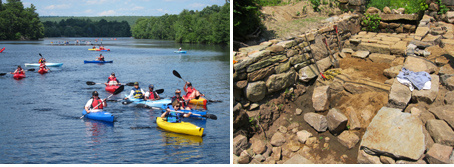
We kept ourselves busy with our full service kayak company, Queen's River Kayaks. This business is a creative way to extend awareness of the mill and property to a different clientele. It is also a wonderful opportunity for locals and vacationers to appreciate the natural beauty of southern Rhode Island.
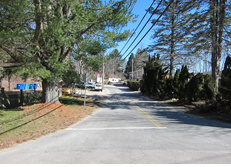
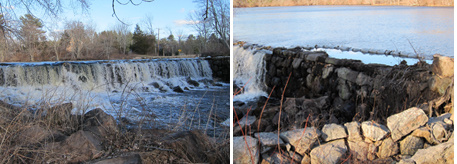
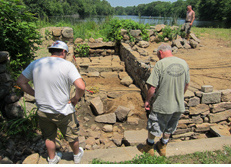
Local resident, Thunder Spears and his crew began their work on the spillway. Thunder's pride in workmanship compelled him to rebuild a second time after the flood destroyed his first 2007 masterpiece.
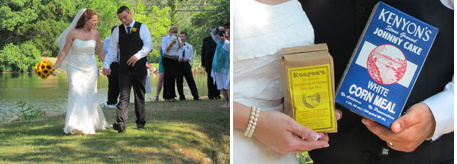
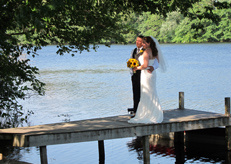
We were also much honored to host the first wedding held at Kenyon's Grist Mill.
Johnny Cake Festival: October 20 & 21, 2012 - Bringing Back Tradition
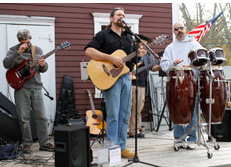
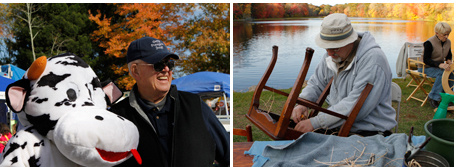
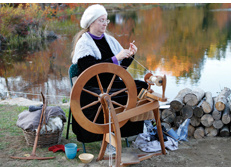
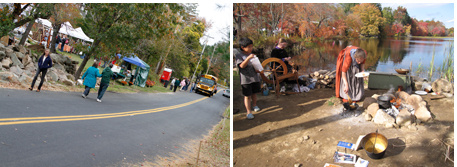
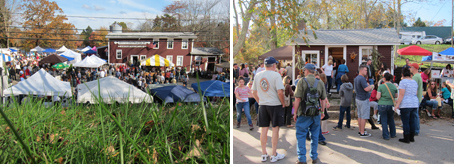
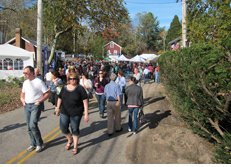
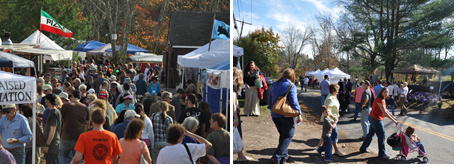
The flood hasn't stopped us from holding our events at the mill. Although the Harvest Festival became our primary event, it has grown exponentially in only a few years. In 2011, the Harvest Festival merged with the old Johnny Cake Festival for the first time, namely the Harvest/Johnny Cake Festival. The Johnny Cake Festival was a created in 1973 and continued until 1985. The 2012 event marked the second annual Johnny Cake Festival since the 70's and 80's.
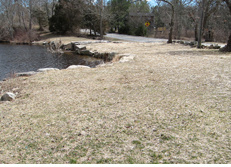
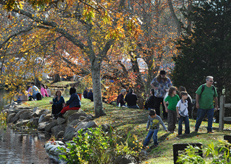
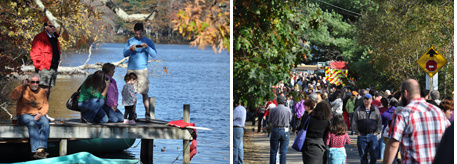
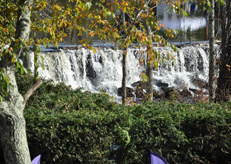
Many improvements to the property helped enhance the event after the flood. In the summer, The Rhode Island Conservation Committee and Northeastern Tree removed hundreds of blown down trees that littered the Queen's River from Route 138 to Route 2. These trees and debris created about 150 mini dams over a few short miles. The river clean up helped lower the water level below our dam and spillway and allowed us to finally utilize the areas of the property that were used for the festival in the past. These areas are called, "The Deep End" and "The Pasture". The year before, "The Hen Yard", just before "The Deep End", opened for the festival. All three areas always remained dry in the autumn months, but the flood had changed them. After the intense rain on the Friday before the event, we only had to use local hay to spread across some muddy areas. We were excited to finally open the second stage for musicians and see a crowd to walk this land again. The newly rebuilt spillway proved to be a wonderful picture taking area, which made us very proud. It was beautiful to see the spillway flow again only days before the festival.
The 2012 Johnny Cake Festival boasted over 100 vendors and entertained over 9,000 visitors. It keeps getting better! Thank you for your support. Visit us on October 19 & 20, 2013. For more information, click here.
Three Years Later: March 29, 2013 - Time, Money & Love
When we visit this page, we are always amazed at what has transpired. We are always taken back by the photos, the memories, the tremendous power of the raging water, the destruction that was left behind, and all of the man hours and dollars. Most of the repairs make things look like our tiny little village is back to normal. Yet, there are still issues that need attention. The main spillway/waterfall needs to be recapped and there seems to be some seeping or leakage in a few spots, which cannot be taken lightly. The property beyond the spillway is still not the same and saturates more easily. Sometimes it seems that the work will never be done. However, it is quite uplifting to look back and see how far we have come over these past three years. I love it when our neighbors stop by and say, "It looks beautiful", or the best ever..."Thank you so much". That is why we work so hard to preserve and maintain this small, but wonderful piece of Rhode Island's history.